
At Power2Drive 2026 2026, Etrel’s Head of Product Design, Matic Vihtelič, took the Industry Pitches stage with a simple but important question: what is the objective of design in EV charging?
For Matic, who has spent almost 15 years in the industry, the answer has changed significantly over time. In the early days, the challenge was not to make charging overly smart or complex. The challenge was to make it believable.
Fifteen years ago, EV charging did not need to impress people with advanced features. It needed to convince them that electric mobility was real, safe and worth taking seriously. Electric cars were still often treated as curiosities, public infrastructure was limited, and many early chargers looked more like industrial electrical cabinets than something intended for everyday users.
At that stage, design was not decoration. It was proof.
A charging station had to move beyond the image of a garage-built machine for engineers and enthusiasts. It had to feel trustworthy enough for municipalities to install, investors to support, and drivers to approach without hesitation. It had to be simple, elegant and understandable, not only for early adopters, but also for their families, neighbours and the wider public.
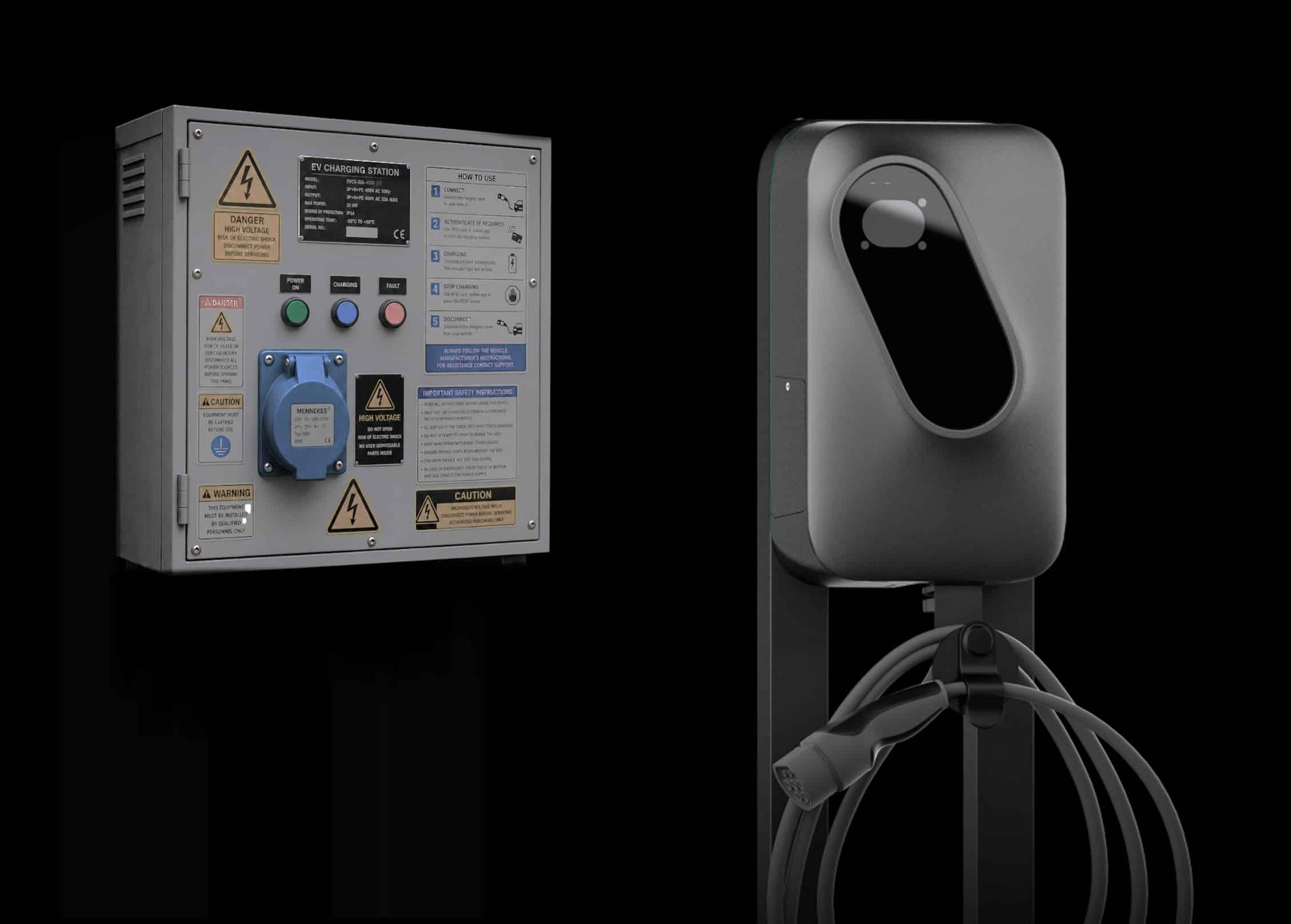
But technical progress alone does not guarantee a good charging experience.
Most of the time, charging works quietly in the background. The driver plugs in, the session starts, and nothing dramatic happens. But when charging fails, everything becomes visible at once. A frozen screen, a payment issue, a locked cable, unclear instructions or a support number that cannot be found in the dark can quickly turn a simple stop into a frustrating experience.
This is where the industry still has work to do.
The current design challenge is not only about placing more chargers in more locations. It is about understanding what actually happens in the field when people interact with infrastructure under real conditions: in bad weather, late at night, with low phone battery, with children in the car, with limited time, or with no patience left for another unclear interface.
Too often, the response to complexity is to add more: more signs, more labels, more lights, more instructions, more screen content. Sometimes this is necessary in the short term. But it should not be the direction we accept as the future.
The best infrastructure does not constantly demand attention. It supports people clearly when needed and stays quiet when not needed.
That leads to the next design objective.
In the future, the best charging experience may not be the one that is most visible. It may be the one that almost disappears.
As charging becomes part of everyday public infrastructure, we should think carefully about the streets and spaces we are creating. A charging station may become as common as a lamp post, a bench or a waste bin. That does not mean every charger should compete for attention with glowing displays, warning labels, bright lights and tangled cables.
More consideration for the driver.
More consideration for operators.
More consideration for the city.
More consideration for maintenance, reliability and service recovery.
More consideration for the public space around the charger.
Will our streets become cluttered with objects constantly asking to be noticed? Or will charging become a calm, integrated part of everyday life, available when needed and quiet when not?
At Etrel, this way of thinking matters because we design charging stations for real-world use, not only for product photos or technical specifications. The charger has to work for the person using it, the operator managing it, the installer servicing it and the environment around it.
Technology will continue to evolve. ISO 15118, Plug & Charge, smart charging and future grid integrations will all help make charging easier and more intelligent. But technology alone does not close the gap between infrastructure and people.
That gap is closed by design that understands the field.

Want to see how this thinking shapes our charging solutions? Explore INCH Pro and INCH Duo, or get in touch with the Etrel team.